Heritage Tree Foundation Circa 2006 - 2008
In 2006 the Heritage Tree Foundation of Canada embarked on the Alberta Heritage Tree Project, accepting nominations and then identifying examples of heritage trees of significance around the province.
The was the official website for the Heritage Tree Foundation.
Content is from the site's 2006 - 2008 archived pages.
These are living links to our history
They have witnessed our past and continue to hold meaning for people today
 Our project facilitates extensive community involvement in a collaborative approach to decision making. It unites the public with a wide variety of disciplines under a common theme. Local governments, Provincial Departments and various NGOs (environmental, conservation, historical, arborist and horticultural) contribute significantly to the project in terms of; identifying trees for Heritage recognition; advertising the Project; distribution of brochures and nomination forms; and payment of plaques.
Upon receiving nominations, Regional Selection Committees (RSC) consisting of local individuals will select trees of importance to their community. The Foundation facilitates the process of establishing these trees with Heritage recognition.
A plaque (ecologically safe) either attached to the trunk or directly in front of the tree on a stake will identify each tree. Identifying Heritage Trees with plaques are a consistent feature of the project, making it easier for community members to locate the tree.
Our book; Heritage Trees of Alberta (Publication date June 2007) provides botanical, ecological, historical and cultural information on specific trees. It will feature Heritage Tree locations on maps arranged according to the Tourist Destination Regions.
An aside: My uncle bought me this book for my birthday with a note that said " Start planning some off-the-beaten path nature field trips when you next visit us in Calgary." I was smitten with the Heritage Trees of Alberta. I loved the fact that in addition to flagging Alberta's oldest and also historically significant trees and patches of forest, there is also provided a wonderful story of their significance. As I started planning some field trips for my annual trip north & west to Calgary, I poured my self a large glass of red wine. I thoughtlessly placed it on the kilim rug I was sprawled on in front of the crackling fire in the living room of my beach house. My nosey "Westie" terrier came over to investigate and before I could say "Stay", he had knocked it over onto the rug. I panicked. Red wine will stain was all I could think. I snatched up my papers and maps before they too became saturated with wine and then ran for a sponge and paper towels. After cleaning up as best I could I realized I would need the carpet to be cleaned, hopefully having the stain removed in the process. I did a google search for rug cleaning company in Brooklyn which ultimately led me to Sunlight Fine Rug Care & Restoration. Thank goodness they specialize in antique rugs. Long before I finished planning my "tree trips" for my summer vacation in Calgary, the rug was cleaned, stain removed, as well as having a few worn areas repaired. I now have found a rug cleaning company that I will return to for all my rug cleaning needs. I don't recommend having to find them under the stressful situation that I experienced. I am still perusing Heritage Trees of Alberta to make sure I don't miss any of the significant trees. I'm sure looking forward to seeing them up close and personal!
|
In 1990, the St Thomas Field Naturalist Club formed the Heritage Tree Committee. They initiated a project to promote an appreciation and awareness of the great range of interesting trees in Elgin County, Ontario. 400 Heritage Trees were labeled with plaques and their locations were detailed on three beautiful pamphlets with colourful maps. To date 30,000 copies of these maps have been published. Lorne Spicer continues to be the driving force behind this project as the committee maintains the plaques and discovers new trees to represent their natural heritage. Combining the success of Trees of Renown and the Heritage Tree Committee, the Heritage Tree Foundation of Canada was formed in September 2002 to develop the Alberta Heritage Tree Project. Vision The Heritage Tree Foundation of Canada's vision: To preserve and celebrate Heritage Trees.
|
||||||||||||||
|
|
||||||||||||||
|
As a registered not for profit Foundation, our first project, The Alberta Heritage Tree Project will identify and catalogue Heritage Trees throughout the Province. These trees offer a representative sample of species that grow within various regions and individual communities. They contain within their stories a unique part Alberta’s history: one very much tied to the land. |
||||||||||||||
|
||||||||||||||
|
With familiarity and increased understanding of the value trees play in maintaining healthy ecosystems, it is hoped a sense of stewardship for our natural history will be inspired. The Foundation will build on the successes of our Alberta Heritage Tree Project, expanding it to include other provinces. |
||||||||||||||
|
The objects of the Corporation are:
“The value of trees is, they touch our souls and heal our hearts. It is ever so subtle, yet powerful. When we are touched by something, we develop a rapport based in gratitude. We begin to care what happens to that which touches us, it is the beginning of stewardship. Yes we read about what we are doing to our Earth but what we hear can easily be forgotten. What we see will be remembered and when we do something – like visit these wonderful treasures of our Natural Heritage – we begin to awaken an understanding of our deep connection to the Earth. It is the understanding and remembering that strengthens this connection and touches our very souls. It is that which the Foundation hopes to be a part of inspiring.” - Libby Fairweather Heritage Tree Foundation of Canada |
||||||||||||||
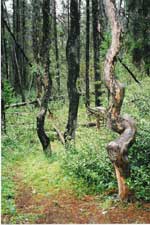 In the mid 1980’s the Alberta Forestry Association adopted the Alberta Trees of Renown as a project. It was designed to gather and record information about unique trees; to help identify and locate them and to protect them as much as possible. Led by Peter Murphy and Bruce Dancik, they published two editions of the wonderfully unique book; Alberta Trees of Renown; An Honour Roll of Alberta Trees in 1984 and 1986.

A big thank you to those who have helped spread the word about our cause and the importance of honoring our arboreal legacy. Working on a pro bono basis, the staff at TNG/Earthling have made a huge difference in our visibility online through their search engine optimization efforts which enabled us to reach a much larger audience and raise both awareness and funds. Success in Google's search results is now credited with extending our visibility and stature in ways that are more authentic than press releases.
Trees are a distinct part of habitat biodiversity. They sustain vibrant ecosystems that support wildlife populations and contribute significantly to bird, animal, plant, and insect diversity.
Trees also:
- stabilize the soil and filter polluted water.
- reduce cooling & heating requirements, resulting in conserved energy demands.
- preserve and foster air quality by removing carbon dioxide (C02) and airborne pollutants.
- abate visual and noise pollution.
- provide welcome shade and protection from UV rays.
- add color and interest to the landscape.
- Studies show:
-
- Trees provide a psychological boost to communities; people are generally more satisfied with their neighborhoods if there are trees.
- Workers are more productive when trees are around their place of employment.
- Hospital patients recover faster if they can see trees outside their windows.
How Heritage Trees support vibrant ecosystems:
Individual trees, groves, shelterbelts, avenues, and hedgerows;
- Help the soil to retain valuable moisture, not just around the base but for a considerable area surrounding it.
- Bare soil directly exposed to rain has the potential for serious erosion. Rainfall is a primary contributor to soil erosion. Leaves help prevent erosion by intercepting and softening the impact of the rain droplets. Leaf litter or organic mulches further reduce the potential for erosion.
- The mixed age of stands and forests is an important criterion in ensuring long term stable ecosystems.
- Trees affect the water cycle by reducing erosion and protecting watersheds.
- Conifers planted on a slope can slow down the movement of cold air that normally moves to low points, which prevents frost pockets.
Arboretums
- Often contain introduced species that have adapted to our climate and survived, thus providing a valuable gene pool for seedlings.
Shelterbelts
- Protection from soil erosion due to wind & water
- They act as a trap for winter snow to provide a valuable source of spring moisture for crops, pastures, gardens and dugouts.
- Preserving wetland and riparian buffers on farms provides valuable wildlife habitat, and helps to protect groundwater resources while providing a measure of protection against drought.
- Farm shelterbelts and woodland habitats attract beneficial insects or predators that feed on agricultural pests.
Age
- Old trees provide long term ecosystem stability.
- Old trees contain genetic pools that have proven resilience and health, providing established offspring that will continue to support diversity for the habitats they reside in.
- Old growth forest serves as a reservoir for species which cannot thrive or easily regenerate in younger forest, and as such can be used as a baseline for research.
- Older trees provide more extensive root systems aiding in the reduction of soil erosion.
- Old growth forests store large amounts of carbon, both above and below ground. These forests collectively represent a significant pool of climate gases.
- Some species of plants and wildlife can only occur where there are old trees.
Height
- Tall trees provide a layered canopy which supports diversity.
Circumference
- One large tree provides climatic, energy and environmental benefits equal to hundreds of new saplings.
Canopy Spread
- Trees with large canopies are able to process more CO2 and release (transpiration) more moisture into the air. Thus helping to reduce energy requirements for cooling.
- Larger canopies provide more soil retention, cooling and shade.
- Trees and plants control solar radiation. Leaves are responsible for intercepting, reflecting, absorbing and transmitting solar radiation.
Survivor of Adverse Conditions
- Trees that have survived where others have not, contain genetic pools with proven resilience and health. They can provide established offspring that will continue to support diversity for the habitats they reside in.
Rare
- Native Species that have established themselves in a region not common to their natural range may be an indication of the natural progression of forest succession. They are anomalies worthy for their ability to grow outside their natural range.
Update March 2007
The Foundation has received 800 nominations since its launch in May 2006!
The Alberta Heritage Tree Project is designed to raise awareness and educate people about the environmental and historical value of trees. The Foundation has done this through a fun and informative process whereby the people of Alberta were asked to submit nominations for their special trees.
The response to our request has been wonderful and we are continuing to accept Nominations. Volunteers are in the field verifying and assessing these trees.
The stories received thus far are rich and colourful, reflecting each Community’s unique cultural profile. Local newspapers, radio and television stations have featured some of these stories; raising awareness of trees as a central part of healthy ecosystems and their impact on the historical growth of a Community.
Many valuable partnerships have been formed between the Foundation and Provincial & Municipal Government Departments. Combined with the support of a wide variety of special interest groups, we have achieved the goal of making the Project a collaborative effort and approach to recognizing these special trees.
The success thus far could not have been possible without the generous financial support of the Alberta Lottery Fund who awarded the Foundation, grants, in 2005 & 2007. Financial support also came from the City of: Edmonton, Calgary, Grande Prairie, Lethbridge, Strathcona County Recreation Parks & Culture, The Regional Municipality of Wood Buffalo and the Alberta Naturalization Network Society.
The hard work of our 100 amazing Volunteers has made this Project a reality.
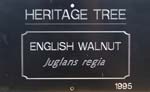
A plaque, either attached to the trunk or directly in front of the tree on a stake will identify each tree. These plaques are being placed throughout the Spring and Summer of 2007 and are paid for by the Municipality or Provincial/Federal Departments. Identifying Heritage Trees with plaques are a consistent feature of the project, making it easier for community members to locate the trees.
The Foundation will share the results of this multidisciplinary approach and everyone’s amazing efforts in the Spring of 2008 when our Book; Heritage Trees of Alberta and web based Tree Registry are published
Update 2008
Heritage Trees of Alberta
Now Available to Order!
300 Tree locations on Maps
80 Tree Stories with colour photos featured
Order Form
Publication Date - September 2008
We received over 900 nominations!
600 trees were verified.
450 trees qualified for Heritage Tree recognition!
Plaques are being placed on or beside each tree this summer, 2008!
Celebrate the success of the Alberta Heritage Tree Project
Order your copy Now!
Tree Stewardship Program 2008
As a follow up commitment to the Alberta Heritage Tree Project, the Foundation is designing a program for volunteers interested in becoming Tree Stewards for Alberta’s Heritage Trees.
This program will train individuals in:
- Tree evaluation
- Plaque care
- Interpretive programming; relating tree stories to the impact on local history
- Importance of trees to local ecosystem
- Providing tree tours